Do I need to oversize my AC drive?
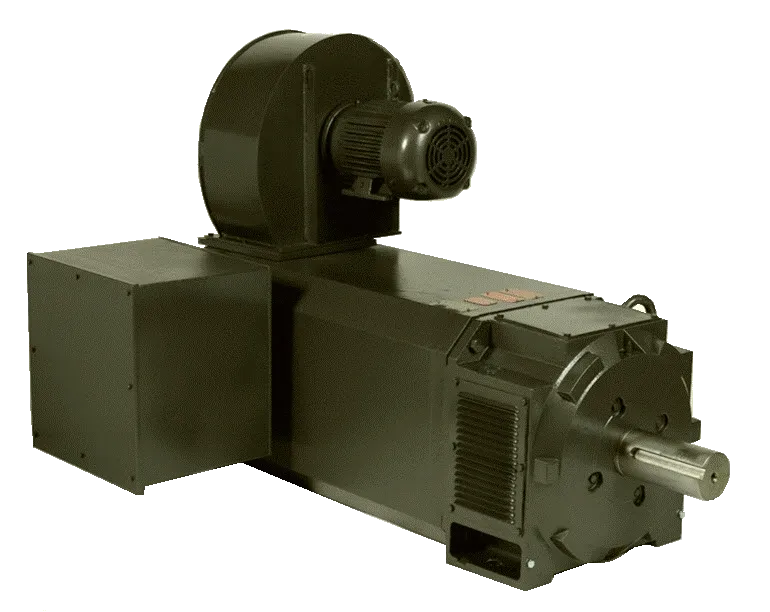
No. You do not need to oversize the drive and motor when converting to AC, as long as you are using the right drive and motor and are not over-exciting the field of the DC motor to increase torque. AC Vector Motors have a wider (CTSR) constant torque speed range (1000:1) as compared to DC motors (10:1). This indicates that it can maintain torque at lower speeds without overheating. Also, AC Vector motors usually have a constant blower fan with filter similar to DC mounted opposite the shaft-end of the motor.
Are AC drives rated the same as DC drives?
No. DC drives are all “Heavy Duty Rated” for applications such as extruders. AC Drives are both “Normal Duty” and “Heavy Duty” rated. Normal Duty is for pumps and fans and has a 110% overload capacity for one minute, while Heavy Duty is for applications such as extruders which has an overload capacity of 150% for one minute. Therefore, be sure to request AC drives with a Heavy Duty rating of the horsepower that you require.
Do I need encoder feedback?
No. The speed regulation of a DC drive is 0.5% with a DC tach, while the speed regulation of an AC drive in Open Loop Vector is 0.2%. Although, an encoder is required on applications associated with web and tension control such as primary and secondary nips or application requiring high precision such as medical tubing. Using an encoder on an extruder will fight the pressure and slowly destroy your gearbox as it is not designed for this servo level response time. If someone recommends a servo performance on a large HP extruder motor, run!
Can I put the AC drive in the same enclosure as my DC drive?
Doubtful. Just because it fits, does not make it a good idea. AC drives have different heat ratings than DC and the drive may overheat in the same enclosure. This is especially true in applications that are greater than 100 horsepower. The watt loss of the drive can be obtained from the manufacturer to determine if there is appropriate cooling.
What specifications are important when installing an AC drive in a new enclosure?
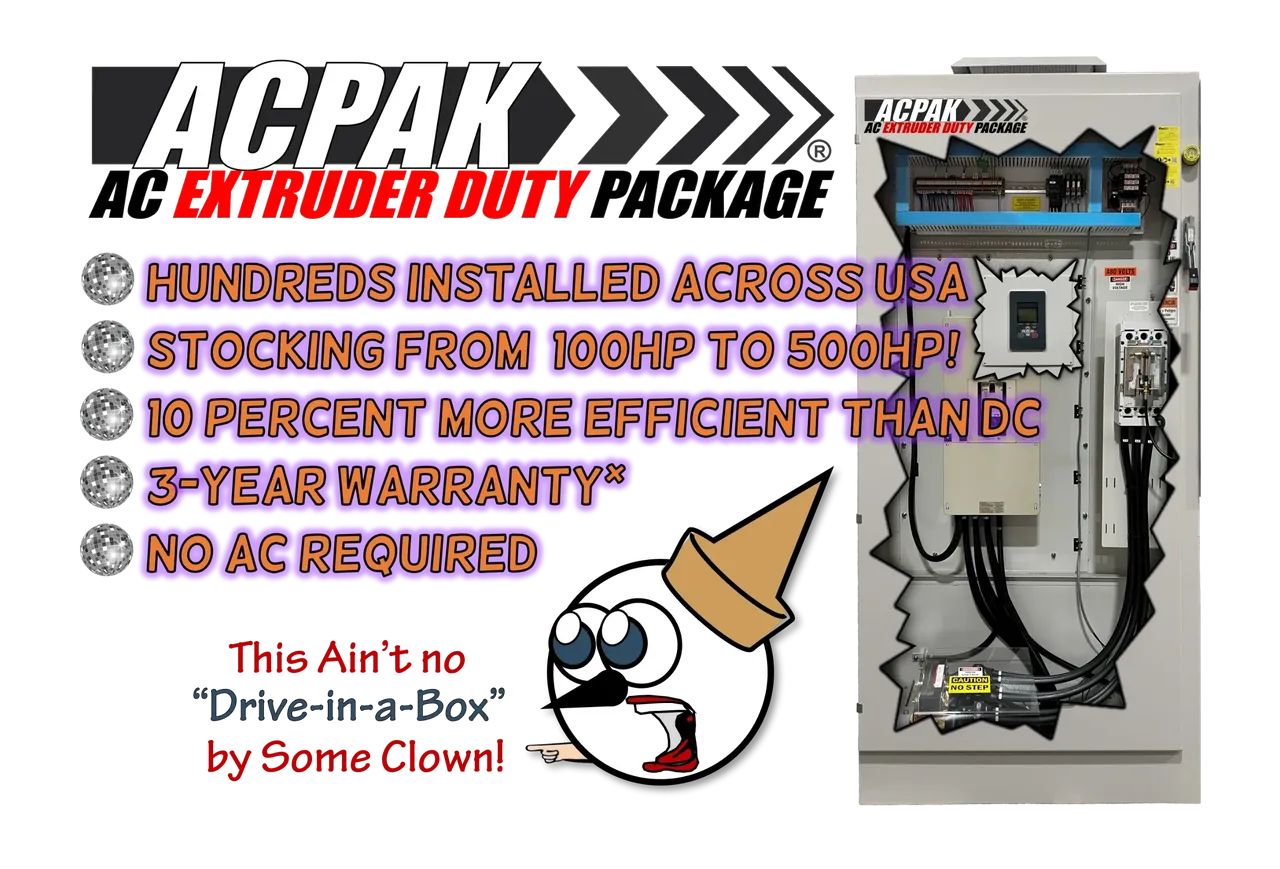
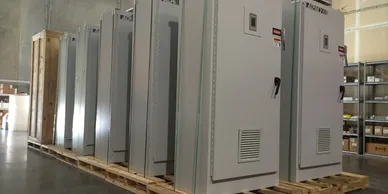
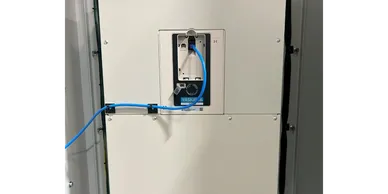
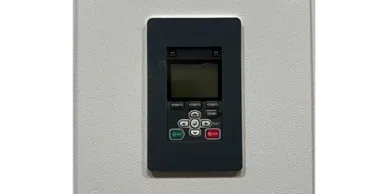
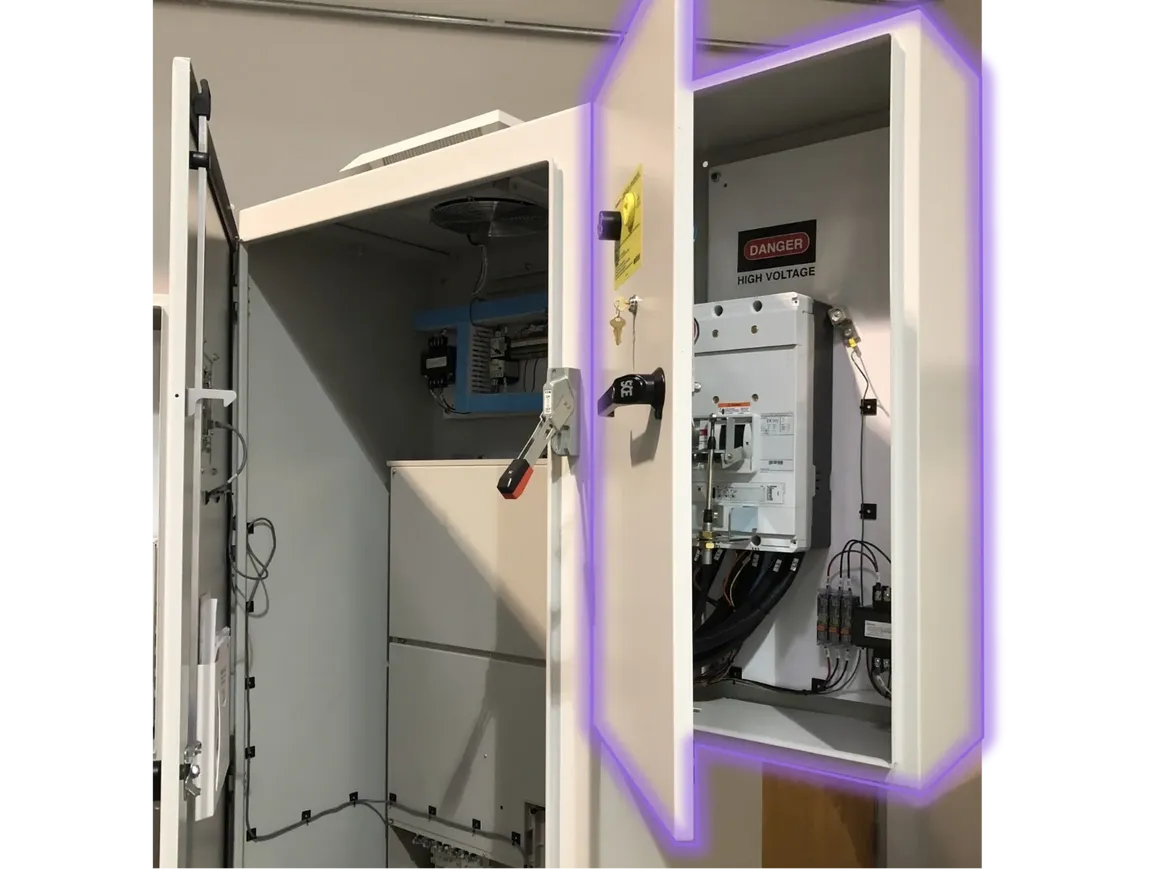
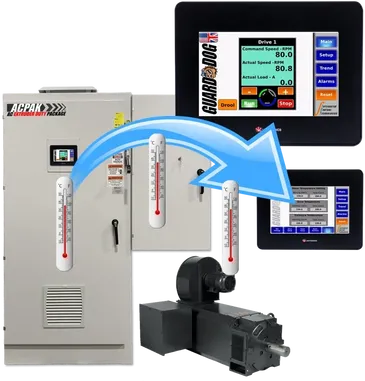
The enclosure should be a NEMA 12 free-standing flange disconnect enclosure with a circuit breaker. There should be ample room for an AC line reactor and blower motor starter. It is also a good idea to have the keypad operator mounted on the door. If the heatsink is not extended out the back of the enclosure, it will require air-conditioning. A good solution is a pre-engineered drive package such as the ACPAK from Integrated Control Technologies as these are all standard features including a courtesy wiring panel.
Is there a limit of how far away I can mount the AC drive from the motor?
Yes. Distances greater than 150 feet require special provisions to ensure motor reliability which will increase the cost of installation. It is best to mount the drive close to the motor instead of in a control room that is too far away.
Can I increase throughput?
Maybe, this is more dependent on your mechanics such as your gearbox and screw than the drive and motor. If the gearbox and screw can take the additional torque and speed, then it is possible to increase the horsepower proportional to the speed resulting in more throughput.
Can I use my existing meters for speed and load display?
Doubtful. Only if it is a newer DC drive that uses 0-10VDC as an output for speed and load. Older DC drives use shunt resistors and the meters would not be compatible. If the meters need to be changed, a good option would be the Remote Drive Interface (RDI) from Integrated Control Technologies.
Is there a physical difference in the size of the AC motor and DC motor?
Yes. This is especially true when using a NEMA frame motor. The overall height of the motor as well as the shaft height will be greater resulting in the need to lower the base. A good solution would be the Reliance RPMAC motor which is built in a frame similar to that of a DC motor, reducing the amount of physical work required in a conversion.
Does the motor require special bearings in a belted application?
Yes. Roller bearings are required for belted applications above 75 horsepower as opposed to the standard ball bearings.
What are bearing currents and can they reduce the life of bearings?
Yes. Bearing currents can reduce the life of bearings in an AC motor. They are caused by stray magnetic flux that induces a voltage on the shaft which discharges through the bearing causing pitting. These currents can be mitigated by specifying the Extruder Duty motor that was specified by ICT. This motor has a shaft grounding ring and insulated bearing, both of which increases bearing life.
Should I remove my isolation transformer?
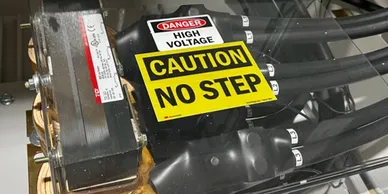
Yes. DC drives require isolation transformers, while AC drives only require AC line reactors. Removing the isolation transformer will increase floor space and reduce kW.
What problems will I run into if I wait until my DC motor fails before converting to AC?
An emergency conversion will always cost more than one that is planned. In addition, there may not be product availability, especially if it is a larger horsepower that requires an enclosure. In such situations, Integrated Control Technologies stocks extruder drive packages and motors through 500HP/1750RPM often available for shipment within 24 hours.
What is the best AC drive to use in a conversion?
If the criteria is the best availability, highest quality, least failures with good pricing, we recommend the Yaskawa AC drive. It is manufactured outside of Chicago and used by many extruder manufacturers and is considered a standard by many within the plastics industry. The ABB drive is also widely recognized.
Can I replace my 1150 RPM DC motor with a 1750 RPM AC motor?
No. While the HP of the drive remains the same, the torque necessary to turn the shaft is significantly different.