Discover how advanced control systems improve product consistency, reduce waste, and optimize your extrusion process. Explore our solutions or connect with our team to learn how ICT can modernize your production line.
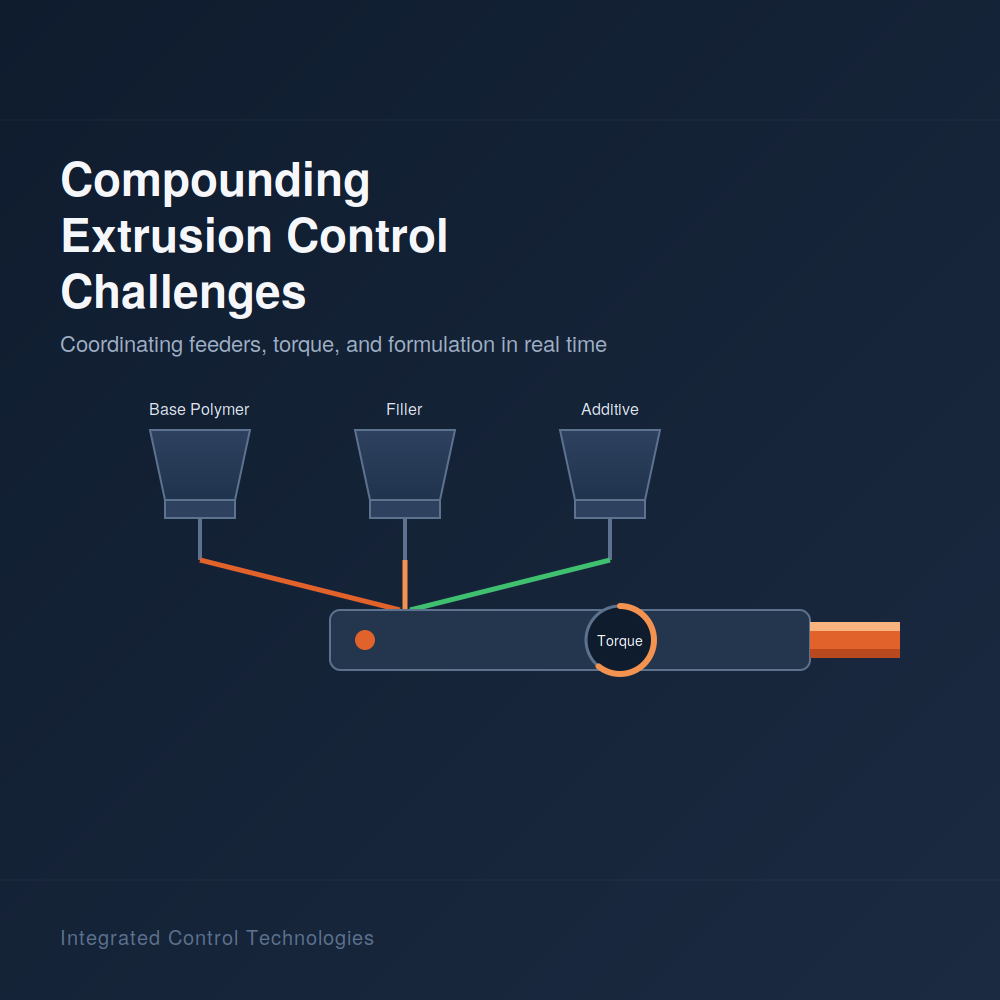
Get Started TodayExtruder control systems play a critical role in modern manufacturing processes, particularly in industries such as plastics, polymer production, wire and cable manufacturing, pipe extrusion, and film production. These systems provide the intelligence and automation needed to monitor, regulate, and optimize the extrusion process from start to finish. By controlling key variables such as temperature, pressure, motor speed, and material flow, extruder control systems help manufacturers maintain consistent product quality while improving overall production efficiency.
At its core, extrusion is a process that involves melting raw materials and forcing them through a die to create a continuous shape. While the process may seem straightforward, achieving consistent output requires careful monitoring of multiple variables simultaneously. Even minor fluctuations in temperature or pressure can affect product dimensions, surface quality, and material strength. This is where advanced control systems become essential.
Modern extruder control systems integrate sensors, programmable logic controllers (PLCs), and specialized software to provide real-time visibility into the production process. Operators can monitor conditions across the entire extrusion line, including barrel temperatures, screw speeds, melt pressure, and cooling systems. When conditions begin to drift outside acceptable ranges, the system can automatically make adjustments to maintain optimal performance.
Automation also helps reduce the likelihood of human error. Traditional extrusion processes often relied heavily on manual adjustments and operator experience. While skilled operators remain essential, automated systems allow manufacturers to standardize operations and maintain consistent results across multiple production lines and shifts.
Another key advantage of modern extruder control systems is data collection. By capturing operational data throughout the extrusion process, manufacturers gain valuable insights into equipment performance, material behavior, and production trends. This information can be used to identify inefficiencies, troubleshoot issues, and improve process design over time.
Extruder control systems also support scalability. As manufacturers expand operations or introduce new materials and product designs, control systems can be adapted to accommodate new process requirements. Flexible architecture allows manufacturers to upgrade components, integrate additional sensors, or implement advanced analytics without replacing entire control infrastructures.
Energy efficiency is another important factor. Optimized control of heating zones, motor drives, and cooling systems can significantly reduce energy consumption across an extrusion line. Over time, these efficiencies translate into lower operating costs and improved sustainability performance.
Ultimately, extruder control systems are a cornerstone of reliable, high-quality manufacturing. By combining automation, real-time monitoring, and process intelligence, these systems help manufacturers maintain precise control over complex production environments. As manufacturing technology continues to evolve, extruder control systems will remain essential tools for companies seeking greater consistency, efficiency, and operational insight.